
Home well drilling and repair in Madisonville, LA
Around Madisonville, most well questions start with where the well can go. Riverfront lots on the Tchefuncte, wooded acreage along LA-22 and LA-1077, and homes on septic systems all come with rules about distance, and a well that ignores them can fail inspection or contaminate easily. We site, drill, replace, and repair home wells here, starting with a walk of your property before any equipment shows up.
Where your well can go matters as much as how deep.
State rules set minimum distances between a well and anything that could contaminate it. On Madisonville lots, three come up constantly.
The river comes with a setback
Louisiana requires a well to sit at least 50 feet from a stream, lake, or ditch, measured from the highest water level of the past 10 years, not today's shoreline. On a riverfront lot, that line can sit well back from where the bank is now.
Your septic system sets the map
A well has to be at least 50 feet from a septic tank, and a drain field normally needs 100 feet, which the state lets drop to 50 for a home well. On smaller wooded lots, those circles decide where the well can go.
The river has an aquifer named after it
Geologists map a deep sand under the parish called the Tchefuncta aquifer, named for the same river. One monitoring well reaches it at around 1,800 feet. Most homes tap much shallower sands, and we choose the right one from what comes up as we drill.
Plan it, drill it, keep it running.
New wells sited correctly for your lot, replacements when repair stops making sense, and repair and equipment service for the well you have.
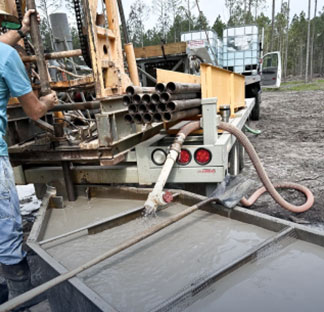

New wells, sited correctly
We start by walking the lot with you: where the septic tank and drain field are, where the river or ditches reached at high water, and how a drill rig can get in without clearing more trees than necessary. Then we drill in 4-inch or 6-inch casing, read the cuttings to set the screen in the right sand, grout and seal the casing, and register the well with the state.
- Septic & river setbacks
- Rig access planned
- State registration filed
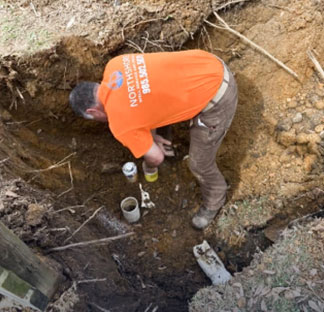

Replacement wells when repair stops making sense
Sand in the water, a casing that keeps failing, or a pump that's been replaced twice in a few years can all mean the well itself is the problem. We'll tell you honestly whether another repair is worth it. If it isn't, we drill a replacement in a spot that meets today's setbacks. The old well then has to be properly plugged under state rules, and we'll walk you through that.
- Honest repair vs. replace
- New well at today's setbacks
- Old well plugged properly
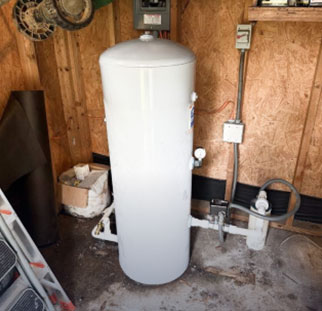

Repairs, pumps, tanks, and filters
For the well you already have, we diagnose before we replace: pump, pressure switch, wiring, tank, or casing. When parts go in, they're upgrades, with 160 PSI poly pipe, galvanized barb fittings, and wiring protected in conduit. We replace pumps and pressure tanks, change filters, and service existing 2-inch wells.
- Diagnosis first
- Pump & tank replacement
- 2-inch wells serviced
We'll tell you when not to drill
Sometimes the right answer is an inexpensive part, not a new well. Robert and Evan Wiener built Northshore Well Service, a family business based in Folsom with a home base on LA-25 in Covington, on giving that kind of straight answer. It's a short drive down to Madisonville, and customers rate us 5.0 out of 5 on Google and Facebook, most often for explaining the problem before fixing it.
- A walk of your lot before any drilling
- Repair vs. replace, explained honestly
- Better parts backed by a stronger warranty
Before repairing my pump he educated me. He went above and beyond to be sure our issue was resolved and explained every step of the way.Denita ForgesGoogle review
What an amazing company, one that actually cares about their clients. I'm beyond pleased with the service, urgency, professionalism, and cost they provided me.Vondaleigh MurphyGoogle review
Madisonville well questions
Most of what Madisonville homeowners ask us is about placement, replacement, and buying a home with a well.
How close can my well be to my septic system?
Louisiana requires at least 50 feet between a well and a septic tank. A drain field normally needs 100 feet, though the state allows that to be reduced to 50 feet for a home well. We locate your septic components before choosing a spot so the well meets the rules on the first try.
I live on the river. Where can my well go?
A well has to be at least 50 feet from the river, measured from the highest water level in the past 10 years rather than the current bank. We look at where water has actually reached on your lot and keep the wellhead and equipment above it.
Should I repair my old well or replace it?
If the problem is a pump, switch, tank, or wiring, repair usually makes sense. If the casing is failing, the water carries sand, or parts keep wearing out early, the well itself may be the problem. We diagnose first and give you the cost of both options so you can decide.
Can you get a drill rig onto a wooded lot?
Usually, yes. We walk the property with you before drilling, pick a well spot that meets setbacks, and plan an access route that keeps tree clearing to a minimum.
I'm buying a home with a well. What should I check?
Ask the seller for the well's state registration and any service records, find out how old the pump and pressure tank are, and have the water tested. We can look over the system so you know what you're buying and what it may need.
Planning a well in Madisonville? Start with a lot walk.
For a no-water emergency, call any time. For a new or replacement well, tell us where the property is and we'll set up a time to walk it with you.
Also serving: Covington, Mandeville, Folsom, Slidell, and Hammond