
Well pressure, repair, and drilling in Lacombe, LA
Lacombe sits between Mandeville and Slidell, along Bayou Lacombe and the edge of Big Branch Marsh. The call we get most from homes here isn't "no water." It's "not enough pressure." Weak showers, sprinklers that barely reach, and a pump that never seems to keep up usually trace back to how the system was built. We fix pressure problems at the source, repair and replace worn equipment, and drill new wells.
Good pressure starts underground.
Most pressure complaints don't come from the well itself. They come from what sits between the well and your faucet.
Every fitting costs pressure
Each 90-degree turn and each section of undersized pipe between the well and the house takes a little pressure away. On older installs with long, winding runs, those small losses add up to a weak shower.
An aquifer shares a local name
Among the water-bearing sands geologists map under St. Tammany Parish is one called the Big Branch aquifer, sharing its name with the marsh along Lacombe's shore. Which sand your well draws from affects how much water it can deliver.
Low ground near the bayou
Plenty of Lacombe lots sit close to the bayou or the marsh. A well has to be at least 50 feet from the water at its highest level in the past 10 years, and the wellhead and controls belong above the high-water line.
More pressure, fewer problems.
Low pressure and flow fixes, everyday repairs, pump and tank replacement, and new home wells.
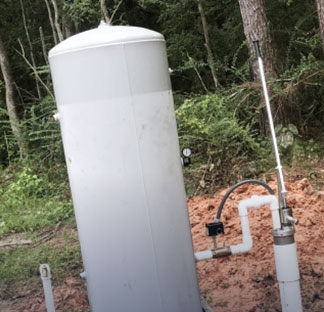

Low pressure and flow fixes
We measure before we change anything: pressure at the tank, how the pump performs, and how the water gets from the well to the house. Then we fix the real restriction, whether that means adjusting the pressure switch and tank charge, re-running the line directly with fewer 90-degree turns, or replacing undersized pipe with 160 PSI poly pipe.
- Pressure measured first
- Direct-line re-piping
- Switch & tank adjustments
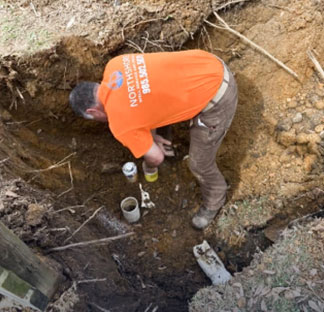

Everyday well repairs
A clicking pump, a tripped breaker, a leak near the wellhead, or water that comes and goes all have a specific cause. We trace it through the pump, pressure switch, wiring, check valve, and casing before replacing parts, and we use galvanized barb fittings at the critical connections. We also service existing 2-inch wells.
- Diagnosis first
- Galvanized barb fittings
- 2-inch wells serviced
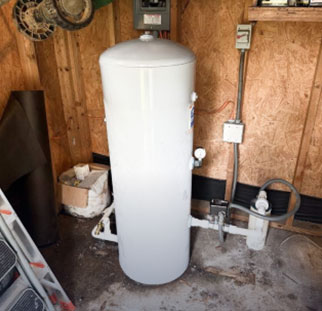

Pump and pressure tank replacement
When a pump or tank reaches the end of its life, we size the replacement to how your household actually uses water, not just what was there before. The wiring goes back in conduit, and filter changes and new installs can happen on the same visit.
- Sized to your household
- Wiring in conduit
- Filter service
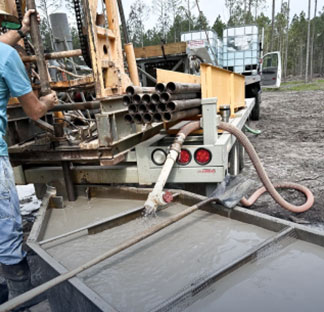

New home wells
For a new home or a replacement well, we choose a spot that meets the setbacks from septic systems and the bayou, read the cuttings to set the screen in the best sand, and build in 4-inch or 6-inch casing with proper grout and a sealed wellhead. Every new well is registered with the state.
- Setbacks checked
- 4-inch & 6-inch casing
- State registration filed
We measure before we sell you anything
A weak shower can be fixed a lot of ways, and the most expensive isn't always the right one. Robert and Evan Wiener run Northshore Well Service as a family business from Folsom, with a home base in Covington, and they built it on finding the actual problem first. Customers rate us 5.0 out of 5 on Google and Facebook, often because we fixed something other companies missed.
- Pressure and flow measured before any changes
- Options explained in plain language
- Better parts backed by a stronger warranty
Before repairing my pump he educated me. He went above and beyond to be sure our issue was resolved and explained every step of the way.Denita ForgesGoogle review
They diagnosed a problem another well company couldn't and fixed some incorrectly installed equipment. I will be calling them for any future issues.Dustin SonsFacebook review
Lacombe well pressure questions
Most of what Lacombe homeowners ask us comes back to pressure and flow.
Why is my well water pressure so weak?
Common causes include a pressure switch set low, a pressure tank that has lost its air charge, a worn pump, a clogged filter, or a long water line with too many turns or undersized pipe. We check each one so the fix matches the cause.
Can I just turn up my pressure switch?
Sometimes, within limits. The pump has to be able to reach the higher setting, and the pressure tank's air charge has to be adjusted to match. Turning it up too far can leave the pump running nonstop. We set it to what your pump and plumbing can handle.
Will a bigger pressure tank give me more pressure?
No. A larger tank doesn't raise your pressure. It stores more water between pump cycles, so the pump starts less often and lasts longer. If pressure is the problem, the fix is usually the switch setting, the pump, or the piping.
What does a direct-line install mean?
It means running water from the well to the house along the straightest practical path, with as few 90-degree fittings as possible. Every turn costs a little pressure and flow, so a direct line delivers more of what the pump produces to your faucets.
Is my well too close to the bayou?
Louisiana requires at least 50 feet between a well and a bayou, ditch, or other surface water, measured from the highest water level in the past 10 years. Older wells may have been placed before anyone checked. We can look at where yours sits and whether its wellhead is high enough.
Tired of weak pressure in Lacombe? Let's measure it.
Tell us where the pressure is weak and when it happens, and we'll come out, test the system, and show you what's holding it back. For a no-water emergency, call any time.
Also serving: Mandeville, Slidell, Abita Springs, and Covington